
Last updated on July 15th, 2025
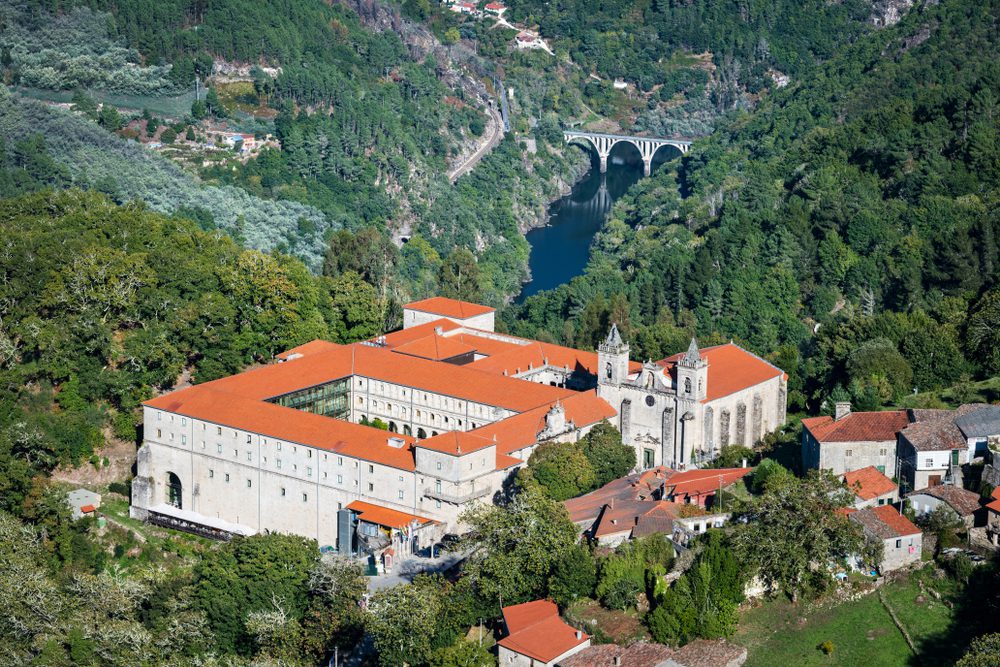
Featured image: Galicia’s Paradore de Santo Estevo is a former Benedictine monastery in the Ribera Sacra | Photo by Andres Garcia Martin via Shutterstock
Galicia’s paradores are a sensory journey, connecting us to history, land and sea
by Carolyn Ray
We’ve all seen sunrises that take our breath away, but have you ever heard one? From my hotel window overlooking Galicia’s breathtaking Sil Gorge, I’m awakened not by the sun, but by a cacophony of finches, blackbirds, wrens and blackcaps outside my window. I’m still bleary-eyed from a long overnight flight, but the sounds stir all my senses. Gazing out my window, I can’t help but wonder what this remote valley would have been like hundreds of years ago — but then again, I’m not sure it would be that different.
On this trip to Galicia, Spain, I’m staying exclusively at paradores, a collection of historically significant castles, monasteries, convents and palaces that are hundreds of years old. There are 98 paradores in Spain, each one unique, stretching from Malaga in southern Spain up to À Coruna and San Sebastian on the northern coast. These comfortable places invite weary travellers to ‘stop and relax’ on their journeys, be it the Camino de Santiago pilgrimage or the Route of the Camellia for garden-lovers.
The first parador was inaugurated by King Alfonso XIII in 1928 in Navarredonda de Gredos (Ávila), with the goal of preserving historic buildings that were important to the history of Spain. In Galicia, there are 11 of these historic hotels, ranging in size from 12 to 137 rooms. Each parador provides a different experience connected to that region, featuring local gastronomy, traditional recipes, fresh produce and seasonal raw ingredients. Many have spas and wellness facilities as well, offering relaxation and revitalization. Pricing is competitive with most hotels, around €100 a night, including breakfast.
Get stories just like this one delivered straight to your inbox. Join the newsletter here.
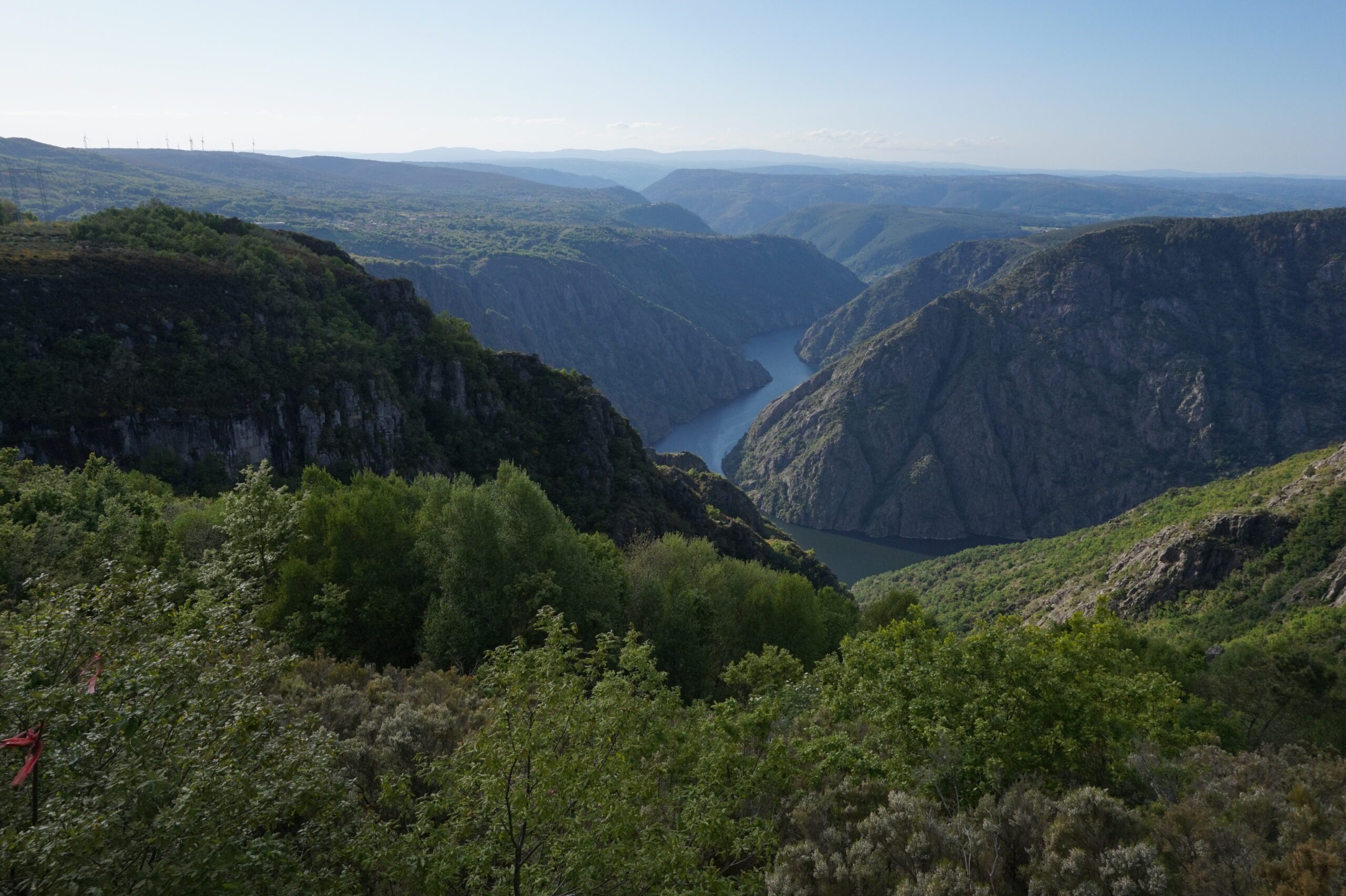
Galicia’s breathtaking Sil Gorge / Photo by Carolyn Ray
Galicia, the land of water
Galicia sits on top of Portugal, in the northwestern tip of Spain. Centuries ago, there was no border here; in fact, Galicia and Portugal share a similar language and an intertwined history best seen in small towns like Tui, which is on the Spanish side bank of the Miño River, facing the Portuguese town of Valença. There are four provinces in Galicia: A Coruña, Lugo, Ourense and Pontevedra.
A land of water, Galicia has thousands of clean, clear rivers, warm hot springs and tributaries that drain seaward into two of its largest rivers, the Sil and Miro. With its 1,650 kilometres of coastline, Galicia is the most important fishing region in Spain and Vigo, with its deep natural harbour, has the largest port in the world, second only to China.
“There is no sea where you don’t find a Galician fishing ship,” says guide Maria Chamadoira Cicerone. The sheer abundance of the Galician seas is mind-boggling. Mussels, oysters and scallops are farmed in the estuaries. Cockles and clams are collected at low tide. I’m fascinated with the idea of eating barnacles, known as ‘percebes’, which Cicerone says are simply boiled or steamed for a few minutes and eaten with your hands.
Galicia is a lush and mystical land. One of my most enduring memories from my Camino walk in 2021 is trekking through its mossy forests and hills. My Camino started in the Galician UNESCO walled city of Lugo, a historic city with intact Roman fortifications dating back to the 3rd century. I remember the oak trees, venerated by the Celtics, who settled here centuries ago. Then and now, it wouldn’t surprise me to see fairies dancing in the morning mist as I walk through the forests.
Four Paradores to Visit in Galicia
1. Spain’s oldest parador: The Parador Hostal de los Reyes Católicos, in Santiago de Compostela
I’m practically bursting after a lunch of traditional Galician broth, sea bass layered over rice, and Saint-James almond cake and vanilla ice cream in the luxurious dining room of Restaurant dos Reis in Galicia’s oldest continuously operating parador. The Parador Hostal de los Reyes Católicos was founded in 1499 as a hostel for pilgrims to rest after completing the Way of Saint James by Queen Isabella I of Castile and King Ferdinand II of Aragon. With four cloisters, elegant corridors and spectacular rooms, the Parador de Santiago de Compostela is considered the finest parador hotel in Spain.
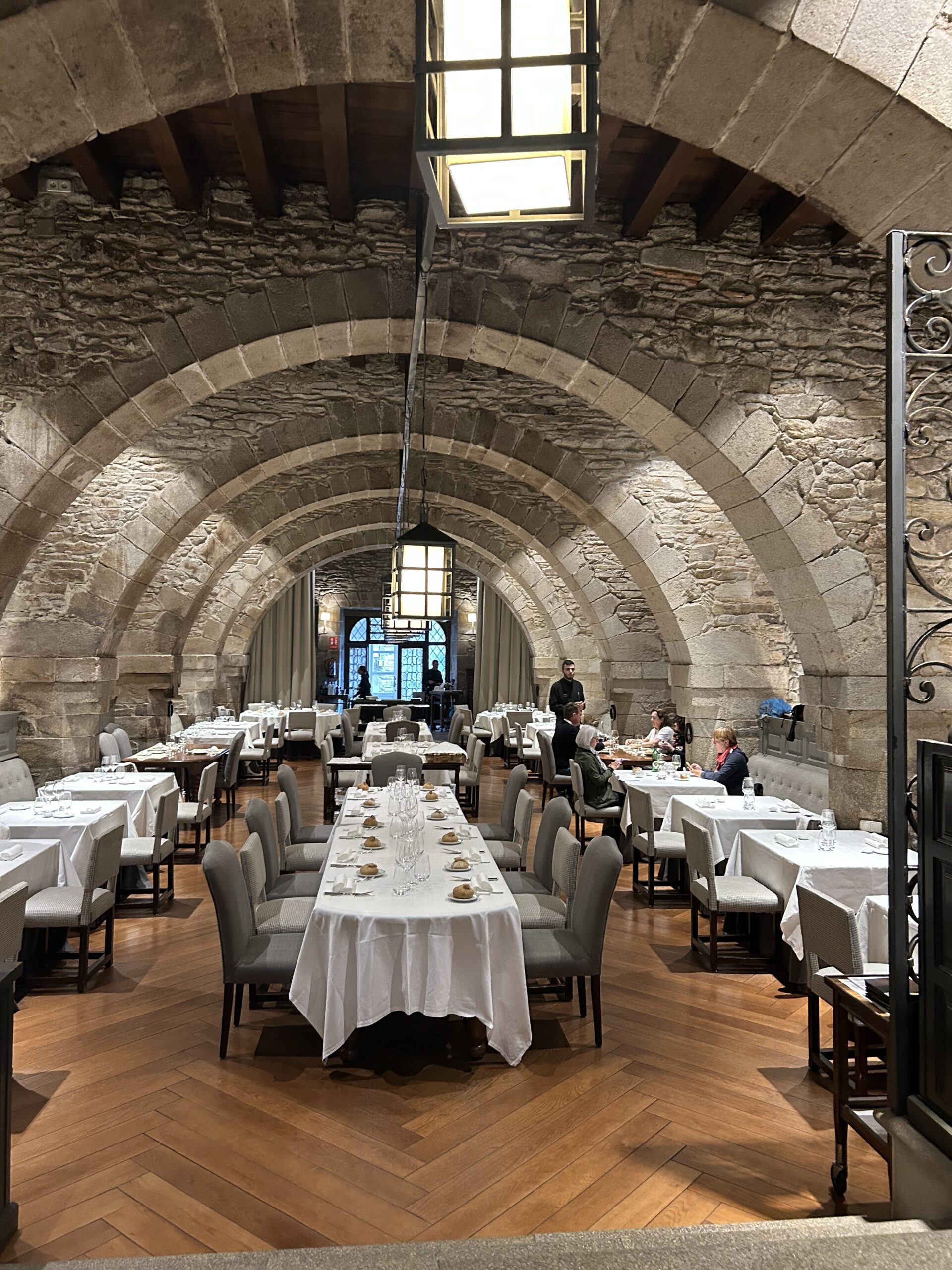
The restaurant at the Parador Hostal de los Reyes Católicos in Santiago de Compostela / Photo by Carolyn Ray
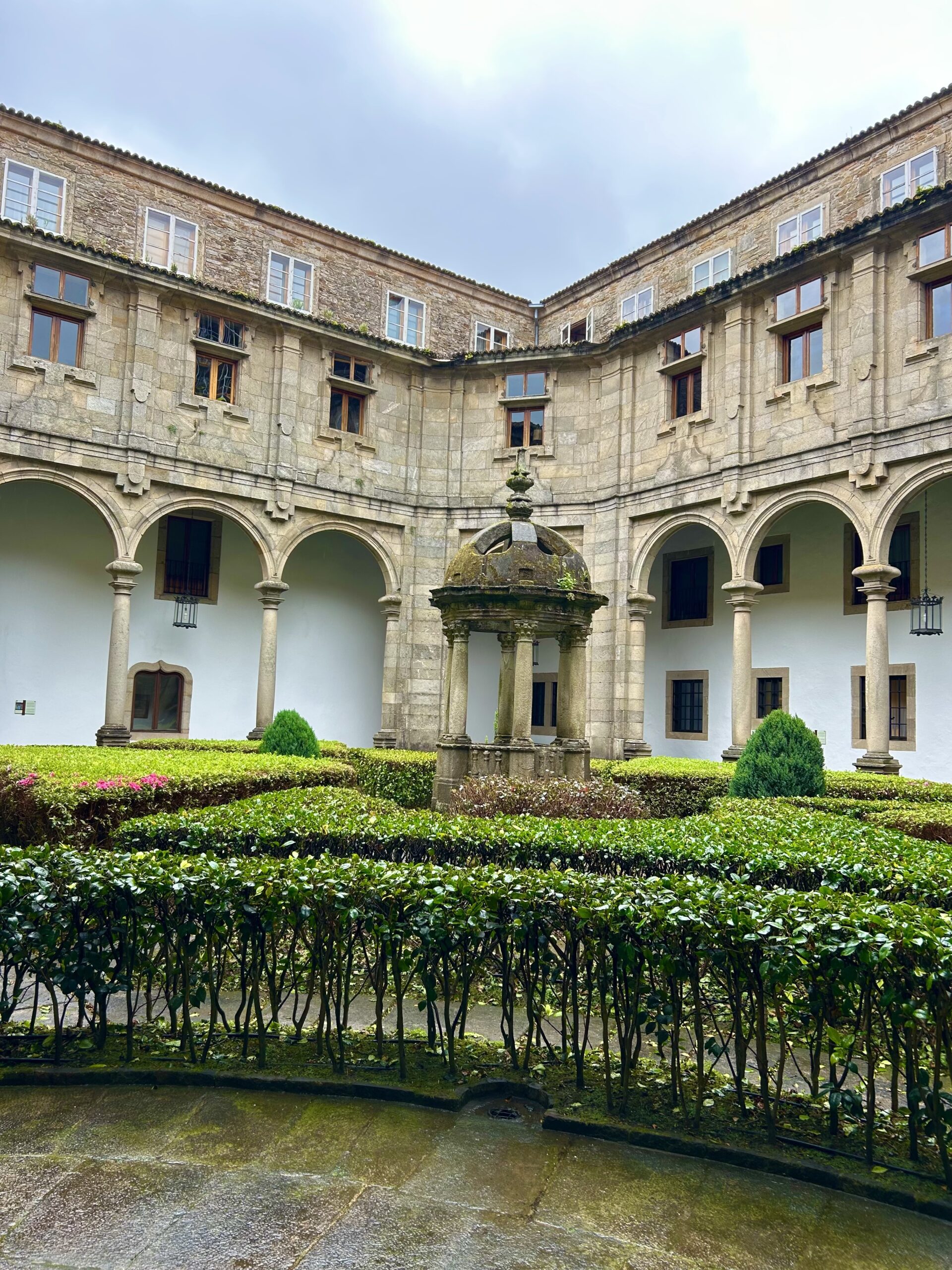
The courtyard at the Parador Hostal de los Reyes Católicos in Santiago de Compostela / Photo by Carolyn Ray
Carmen Pita, Director of Tourism Promotion of Galicia, tells me how important paradors are to Spanish culture. “The idea of a parador is that everybody is welcome, that we are all the same,” she says. “Paradors offer quality, wine and food, and show that we are proud of our culture and history.”
Outside this Paradore, there’s the sound of bagpipes as pilgrims take turns putting their feet on the scallop shell near the Cathedral de Santiago. I’m brought to tears, remembering my first Camino from Lugo to Santiago. In that moment, I decide it’s time for me to return to the Camino in 2026, an idea that fills me with joy and anticipation.
Stay connected here with an Airalo eSIM. Use code JOURNEY10 for 10% off.
2. Nestled in the Sil Gorge: Parador de Santo Estevo, Ourense
Near Ourense, in a region called the Ribera Sacra (Sacred Shore), the Paradore de Santo Estevo is in a Benedictine monastery. The monastery has three spectacular cloisters: one Romanesque, one Gothic, and one Renaissance. When it was founded in the 6th century, the monastery was a place of natural healing, providing food and wellness, a tradition that continues today.
There are 77 converted monks’ rooms that have spectacular panoramic views and are surrounded by a verdant forest of oak and chestnut trees. I sleep with the window open, awakening to the sounds of Eurasian wrens, chaffinches and blackbirds and a glowing orange sunrise.
After a traditional breakfast of jamon, cheese and yogurt, I hike into the Sil Gorge, one of the Ribeira’s most stunning landscapes. Later that day, I take the elevator down to Dos Abades Restaurant, which is located in the former monastery stables with 14-meter-high stone ceilings. Feeling adventurous, I dip into a spiky sea urchin, followed by a Galician specialty, grilled octopus.
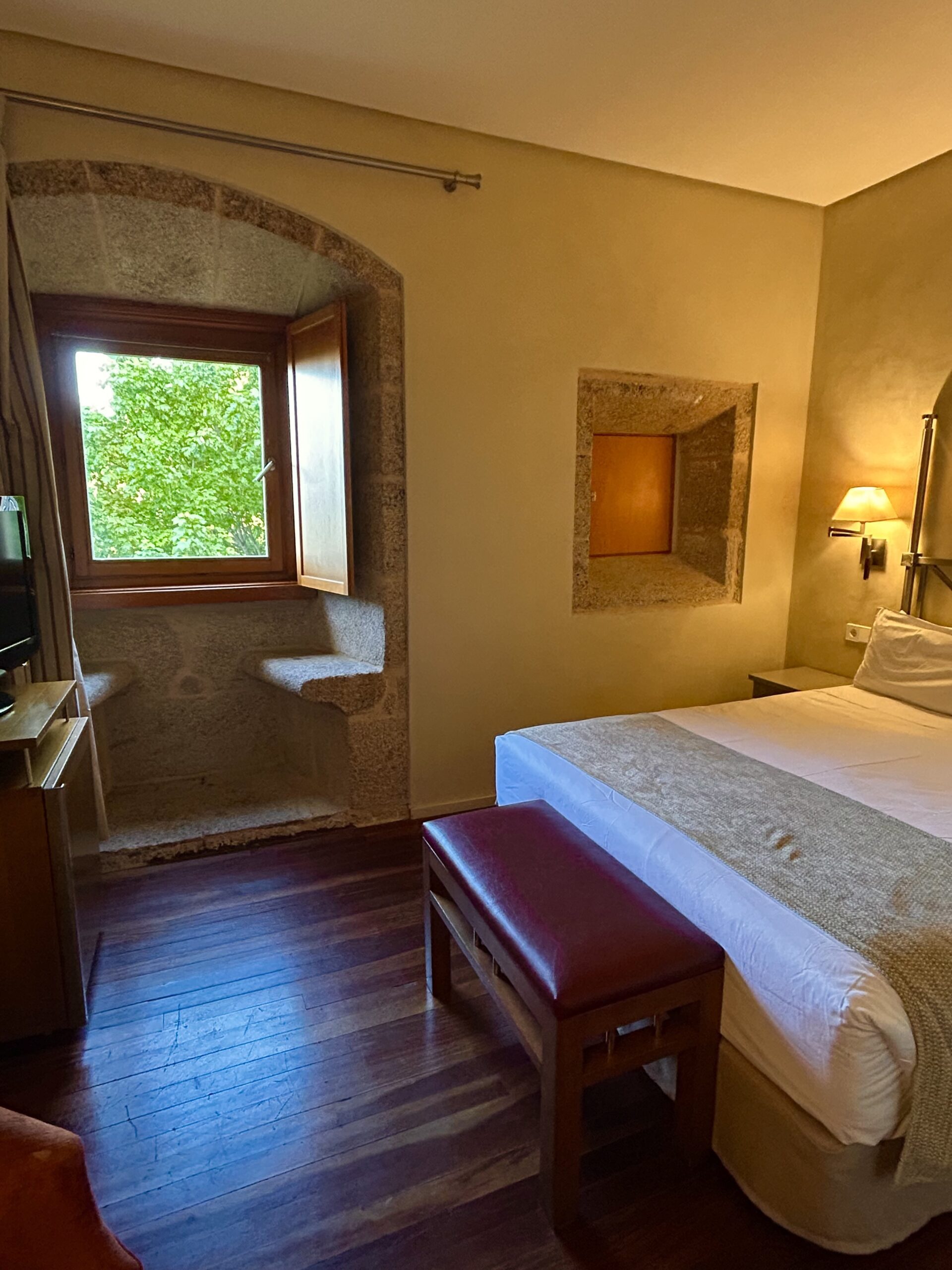
Converted monk’s rooms open up into the forest / Photo by Carolyn Ray
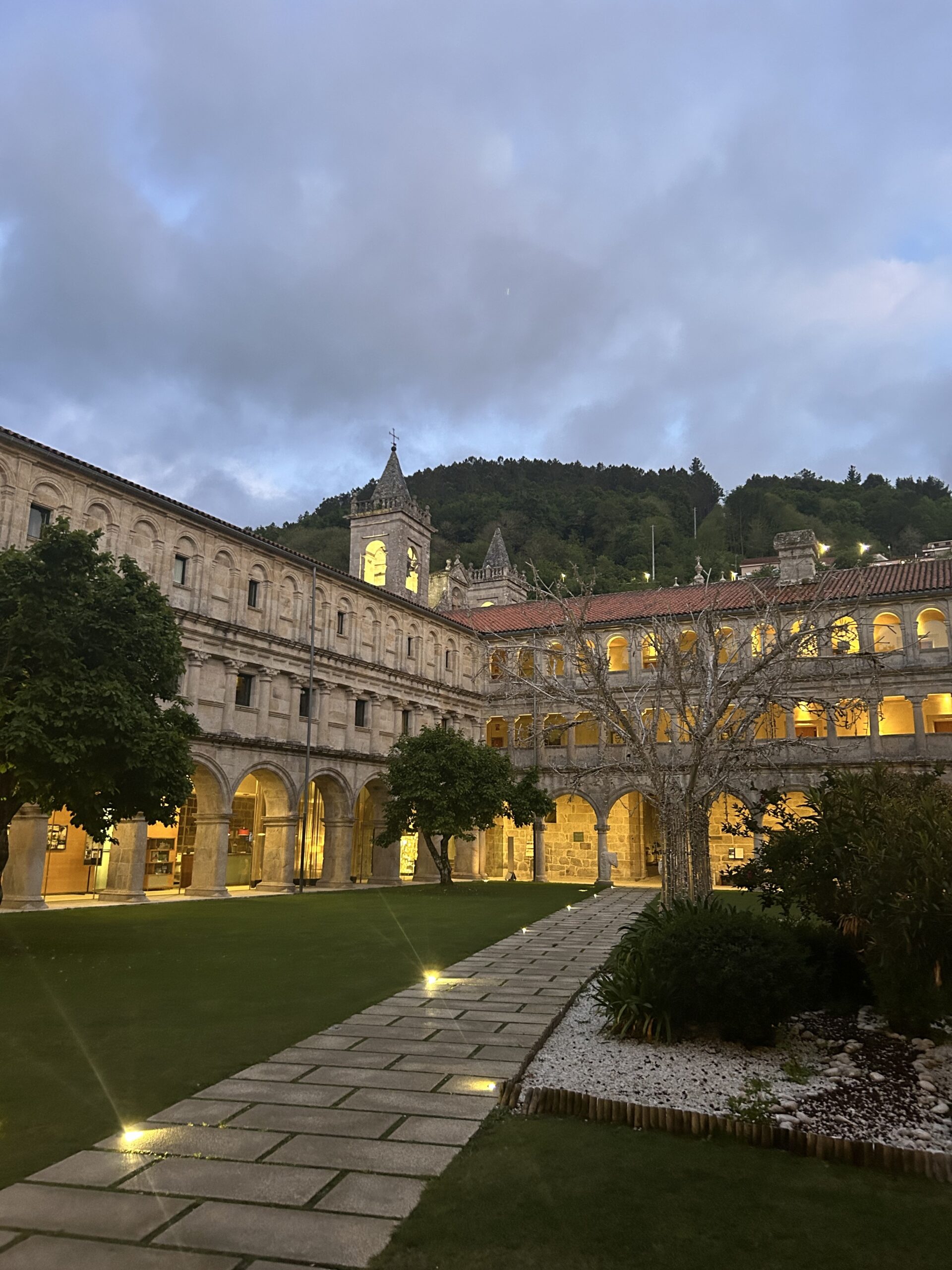
The parador at night/ Photo by Carolyn Ray
3. A Medieval Fortress: The Parador de Baiona on the ocean
Perched on the ocean, the Parador de Baiona is a cross between a medieval castle and a stately home. Founded in 1497 by the Catholic Monarchs, it’s built on the site of the old, fortified town of Baiona and was declared a National Monument in 1950. There are 122 rooms here, and it’s the most luxurious of the paradores I stay at, with large rooms facing the ocean.
My room has a view of the Atlantic Islands of Galicia National Park, which includes the Cies Island archipelago and Rodas Beach, named the most beautiful in the world. Here, we meet a group of women from Canada who are doing what they call a ‘princess camino’ with long stops along the way at the paradores along the coast to relax and renew.
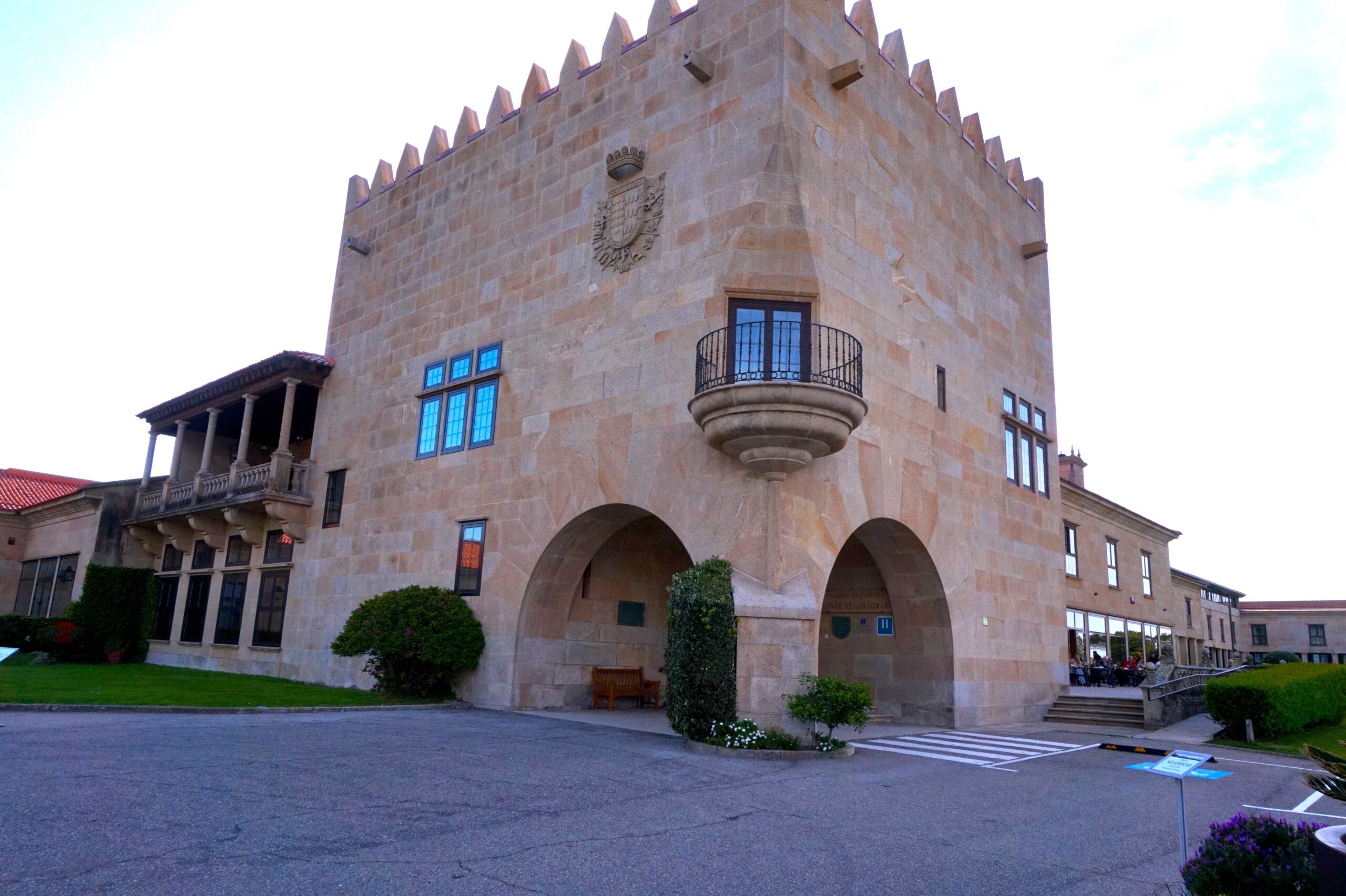
The Parador de Bariona’s castle-like entrance / Photo by Carolyn Ray
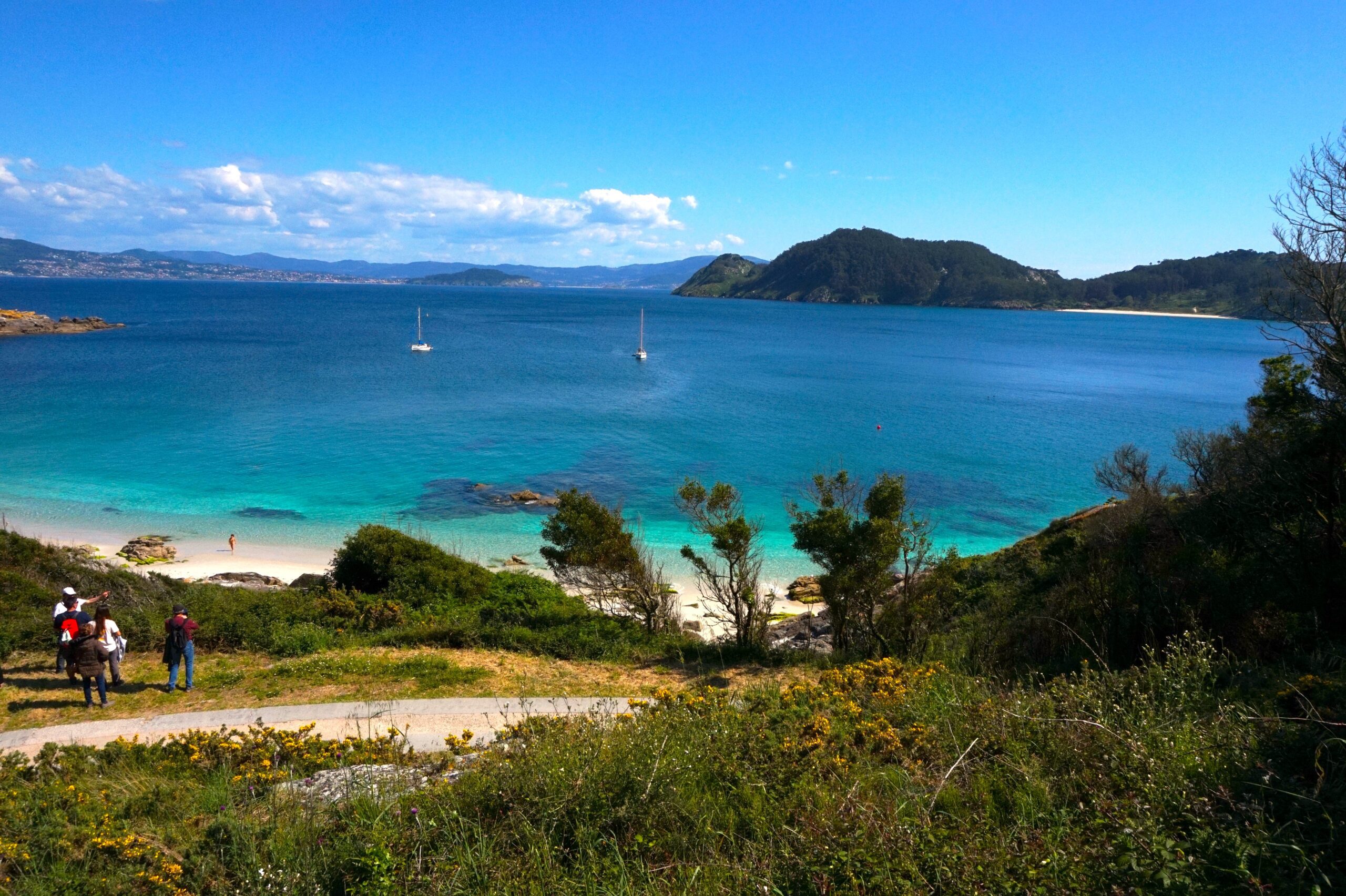
Cies Island archipelago and Rodas Beach, near Bariona/ Photo by Carolyn Ray
4. The Albariño wine capital of Galicia: Parador de Cambados
Located between Santiago de Compostela and Pontevedra, the seaside village of Cambados is known as the Albariño wine capital of Galicia. The old centre of Cambados has several remarkable ‘pazos’, traditional country houses of the nobles in Galicia. In fact, Parador de Cambados is a former Pazo de Bazán, an elegant manor house, near the ocean. With 58 rooms, this parador exudes comfort, with a library and lounge full of pilgrims planning their next day’s walk.
Not too far away is Pontevedra, a medieval and pedestrian-friendly town. Not only is the local market (Mercado de Abastos) worth a visit, but it’s on the route for the Camino de Santiago.
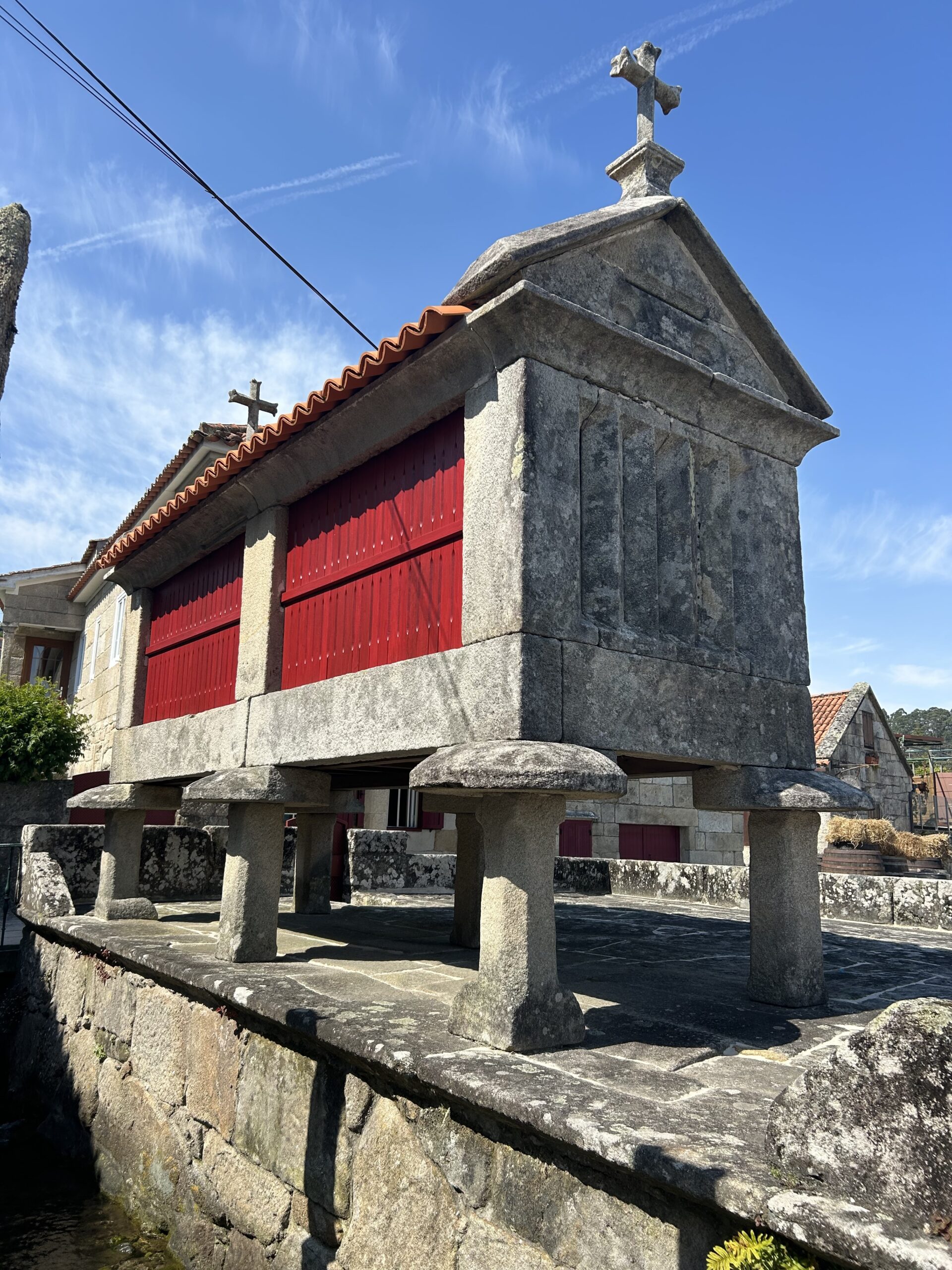
Galicia’s historic seaside raised granaries or hórreos in Combarro / Photo by Carolyn Ray
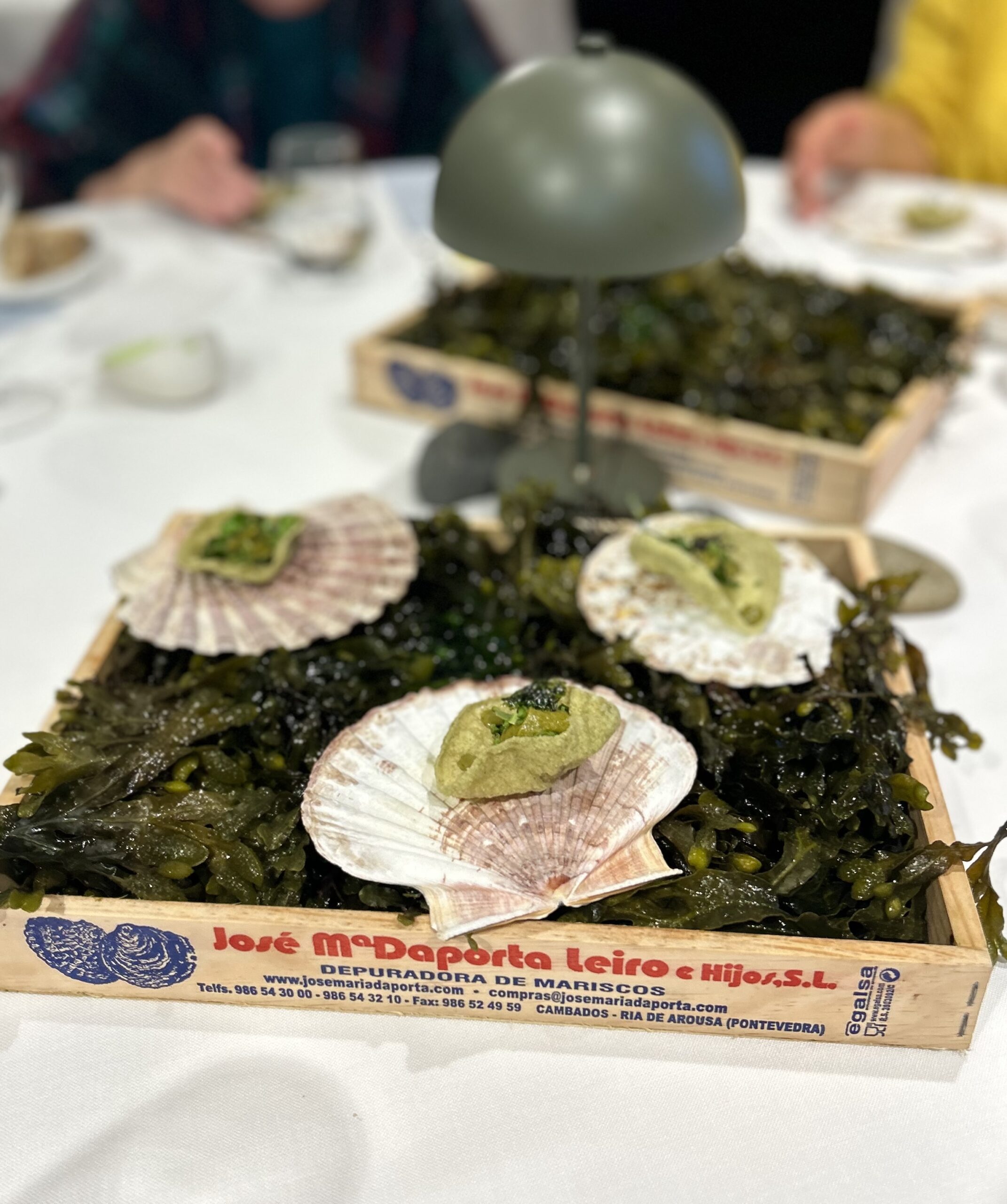
A Michelin-star dinner at Yayo Daporta in Cambados/ Photo by Carolyn Ray
More to see in Galicia
There’s more to see in Galicia, from wineries to historic villages and towns, including:
- Monte Santa Trega, a Celtic archaeological site at the mouth of the Mino River between Portugal and Galacia where the Galaic lived before the arrival of the Romans 3,000 years old
- Pontevedra’s Basilica of Santa María A Maior was built in the 16th century, paid for by the guild of seafarers
- Established in 2001 on the Sil Gorge, Regina Viarum Winery produces the first Galician Tempranillo and is considered one of the most innovative wineries in Galicia
- Mar de Frades: Founded in 1987 on a hillside overlooking the Atlantic Ocean, Mar de Frades’ vineyard is raised above the ground due to humidity. There are also cooking classes at the nearby Quinta de San Amaro restaurant
To learn more, visit Galicia Tourism or Spain Tourism websites.
How to get to Galicia
The nearest major airport to Galicia is Porto, Portugal. From North America, take Air Canada to Madrid or Air Transat to Porto. Check for flights here.
While the best way to get around Spain is, of course, on foot, getting to some of these remote areas requires a vehicle and a guide. Rent a car here.
Spain has one of the very best train networks in Europe and in the world. With the high-speed train, you can travel very fast and easily between the main cities, including the OUIGO high-speed train and Renfe. Book your train trip here on Trainline.
Disclaimer: The writer was a guest of the Tourist Office of Spain in Canada. She is currently planning her next Camino pilgrimage along the Camino del Norte in April 2026 and plans to stay at paradores, hostels and albergues along the way.

More From Spain
Carolyn Ray

In 2023, Carolyn was named one of the most influential women in travel by TravelPulse for her efforts to advocate for women over 50 in travel. She has been featured in the New York Times, Toronto Star and Conde Nast as a solo travel expert, and speaks at women's travel conferences around the world. In 2025, she received her second SATW travel writing award and published her first book "Never Too Late: How Women 50+ Travellers Are Making the Rules" with co-author Lola Akinmade. She leads JourneyWoman's team of writers and chairs the JourneyWoman Women's Advisory Council, JourneyWoman Awards for Women 50+ and the Women's Speaker's Bureau. She is the chair of the Canadian chapter of the Society of American Travel Writers (SATW), a member of Women Travel Leaders and a Herald for the Transformational Travel Council (TTC). Sometimes she sleeps. A bit.
I’m so inspired by these unique places in Spain but at 75 I’m not quite ready to see all these wonderful places completely alone. Is there a small group for solo but not alone groups that travel to or near these wonderful places in Spain?
Hi Susan, Yes! Please do check our Women’s Travel Directory for tours to Spain! https://directory.journeywoman.com/tours-for-women-over-50/