
Last updated on December 8th, 2025
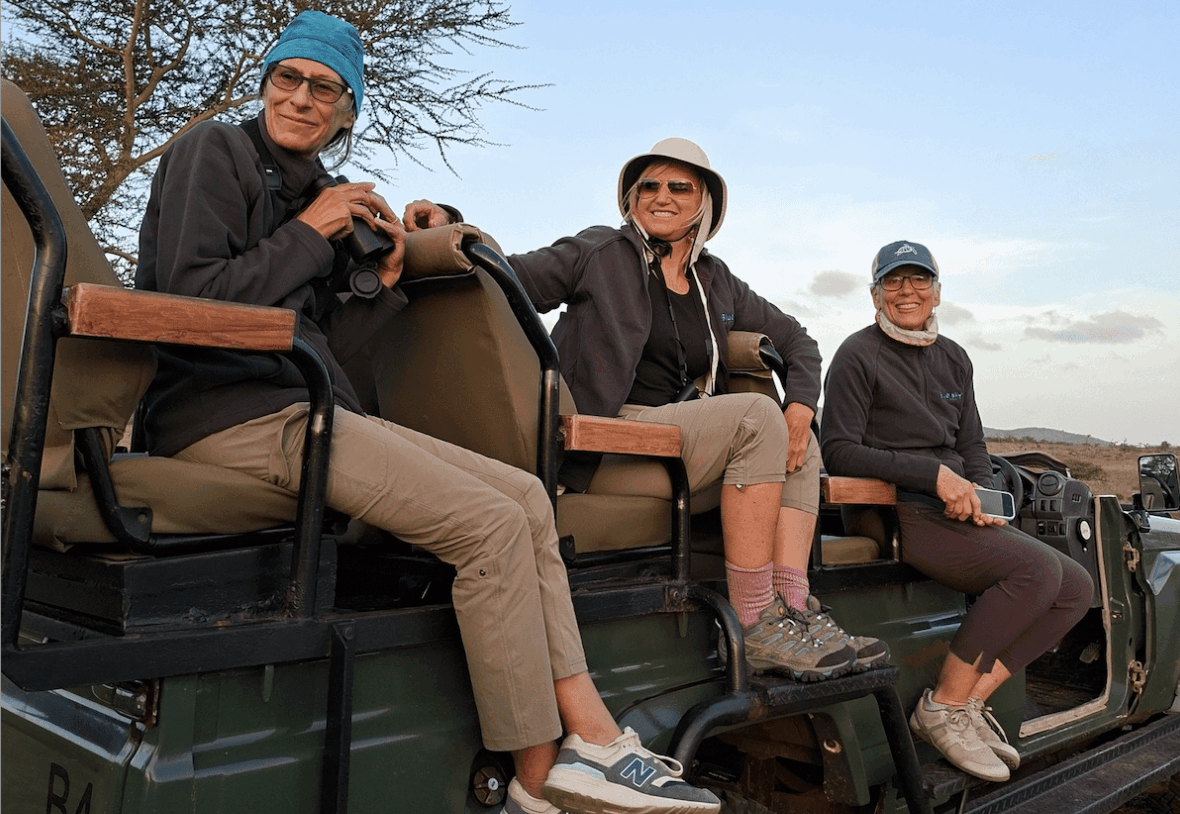
Featured image: Observing wildlife from a safari vehicle is a heart-opening experience / Photo by Carla Geyser
There’s an inner journey that happens on a safari
by Carolyn Ray
“Mama Africa will open her arms to you — all you have to do is open your heart”. When Carla Geyser, Founder of Blue Sky Society Trust first said this to me, I wasn’t sure what she meant. But after two weeks of awe-inspiring, pulse-pounding moments in South Africa, I now understand why women who safari together share a special bond.
When you’re in an open-air safari vehicle, there are no barriers from the animals in the wild. As I watch massive bull elephants come lumbering past, or lionesses hunt nearby, I realize just how vulnerable I am. It’s an uncomfortable feeling, knowing there is no physical protection between me and a family of lions or a group of cape buffalo. Every day, there are moments where I’m suspended between fear and joy. I have to learn to believe again —in myself, in my guide, in my group and in nature. I have to trust that adopting the most respectful behaviours — to be small, to blend in, to be silent and to be calm – will not make me appear like a threat to these animals, and show them the same respect they show me.
As our small group of women travels to different wildlife reserves near Durban, South Africa, it seems as if there is an overabundance of hippos, giraffes, elephants, impalas, crocodiles, monkeys and zebras. But there’s a deeper message on this safari — that we, as humans, need to do better and be better. When these animals are safe, the world is safe. And sadly, that’s just not the case. It’s a constant battle as humans destroy species and drive them into extinction, but through conservation and education, we can learn to make a difference.
Starting our journey with purpose
In September, I travel to Durban, South Africa to meet a small group of eight women on our first-ever JourneyWoman trip with the non-profit Blue Sky Society Trust, founded by Carla Geyser in 2012. A member of our Women’s Travel Directory, Carla had travelled to Norway for our 30th anniversary trip to Norway, where we hatched the idea of an all-women trip to South Africa.
We meet for the first time at Coco de Mer Boutique Hotel in Ballito, just north of Durban. But it’s an easy connection, because before the trip, we connected on three pre-trip zoom calls. I knew we were bound by a shared love for wildlife, a desire to assist with humanitarian efforts and learn about the challenges facing endangered species like rhino, pangolin and elephants. Blue Sky’s itinerary was intentional — we would avoid more-travelled areas like Kruger Park and opt for smaller reserves, locally owned hotels and meet conservation experts along the way, most of whom Carla has worked with for years.
“To have a trip where you can come to a place and its safe — somebody’s there to meet you, show you where to go, what to do,” says Carla Geyser. “South Africa is an incredible country. Mama Africa can overwhelm you with its culture and diversity, but it can also make you feel very much alive.”
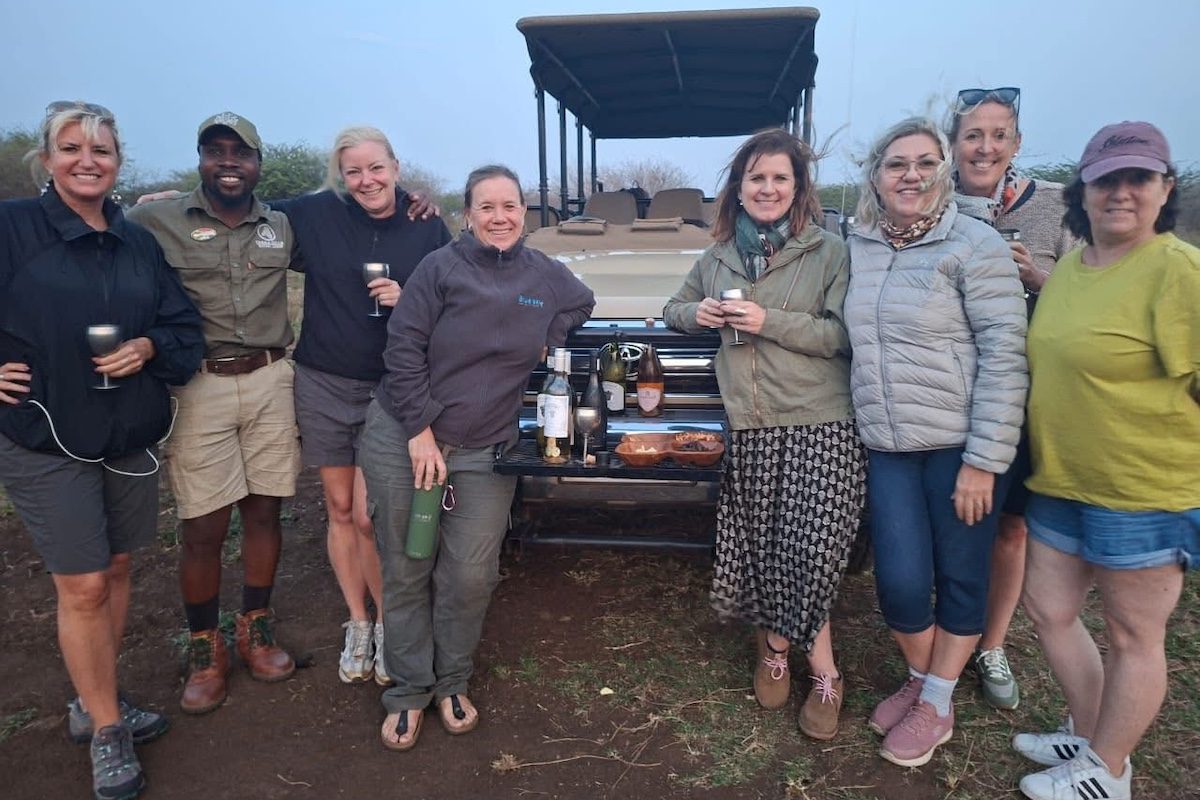
Enjoying a sundowner after an evening game drive in South Africa/ Photo by Carolyn Ray
Seven extraordinary experiences that opened my heart
1. Watching a bloat of hippos float in the river
Our first real wildlife interaction is at St. Lucia’s Igimangoliso National Park (which means ‘a place of wonder and miracle’ in the Zulu language), near Durban, an area rife with over 1,600 hippos. They seem harmless enough, but we’re told that’s not the case, especially when they are out of the water. Hippos, which spend the day floating leisurely in the nearby river, are nocturnal and leave the muddy waters at night in search of fresh grass. All around town, there are warning signs to keep a safe distance.
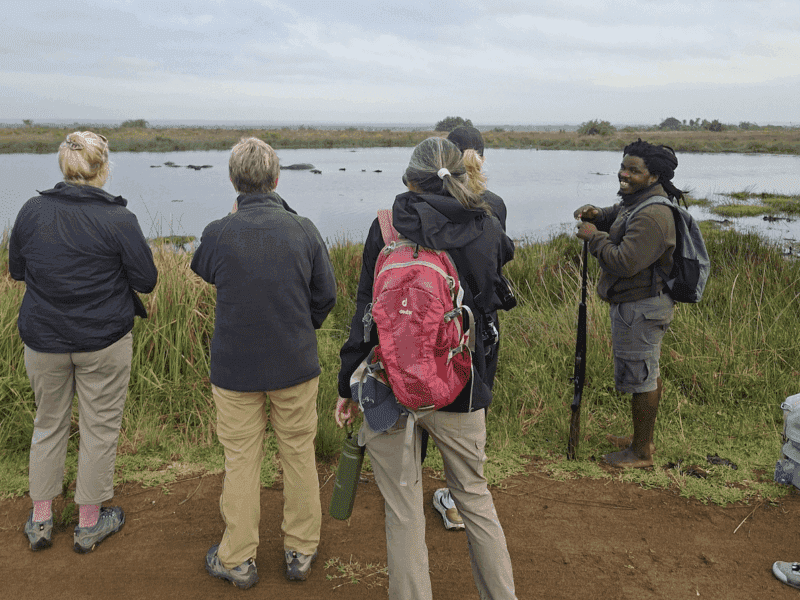
In the morning, guided by the barefoot Nunu, we strike out into the grasslands on our first bush walk, coming just metres away from hippos that gaze at us with curiosity. As we walk around the pond, they follow us in the water, to the point where I get nervous. But once again, if we respect their space, they return the favour. Nunu guides us around the area, showing the little ways that nature is connected. An ardvark digs a hole that’s then used by a hyena for safety. Or how the dung beetle, which feeds on droppings, is then ‘cleaned’ by parasites on its legs. Everything, everywhere, is connected, he reminds us.

2. The majesty of lionesses on the move
When we arrive at Hluhluwe Imfolozi Game Reserve, a Big 5 Game Park in the KwaZulu Natal region, everything shifts. Now we are in the presence of lions, part of the ‘Big Five’, which also includes the cape buffalo, lion, elephant and leopard. This is the oldest proclaimed reserve in Africa, covering 94 million hectares. Park regulations require electrified fences around the park. We stay at the stunning Rhino Ridge Lodge, which is co-owned and staffed by residents of the local Indigenous community. In the evening, we are escorted to our luxurious cabins, set alongside the ridge.
It’s here that I see my first glorious male lion in the wild. Despite my anxiety that he will leap into our vehicle, he doesn’t even glance our way as he strolls past our Range Rover to mark his territory and then stretch out in the road. Clearly, he’s not interested in us.
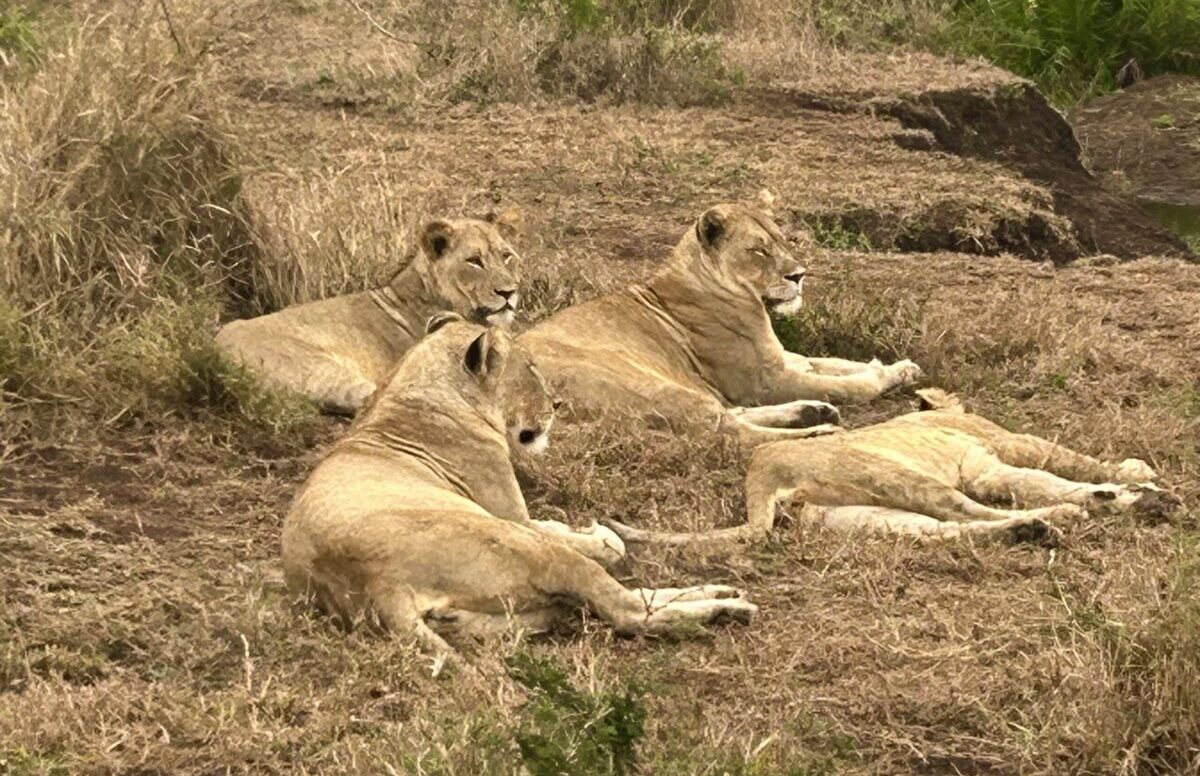
However, in Zuka Private Reserve I feel more than a tinge of fear as we pull up near four female lions relaxing in the sunshine. Our guide, Kel, moves the truck even closer to the lions. Just a little too close for comfort, I think, as they leap up and stride in our direction, spotting a warthog behind our vehicle. Sitting on the top seat, I am convinced that this is it. I start to squirm.
“Don’t move,” Carla whispers, as my friend Jennifer and I freeze and grip sweaty palms, imagining a lion leaping onto our heads. It’s an emotional moment as the lionesses glance up, walk past us and go after the warthog. Jennifer and I hug and break into tears of relief. After that, it’s time for a sundowner.
3. Witnessing a crash of rhinoceros
With two game drives in the morning and afternoon, we see zebras, kudu, impala, nyala and even wild dogs, but the star of the show in South Africa is the rhinos. Rhinos are among the most endangered animals in the world, often killed for their horns, which can fetch thousands on the black market, despite not having any medicinal value. It’s a serious problem in South Africa, fuelled by a growing demand for rhino horn, primarily in China and Vietnam and driven by international criminal syndicates. Park officials ask us not to tag any photographs of rhinos with the location so as not to alert poachers.
During 2012, both the Western black rhino and the Vietnamese population of Javan rhinos were declared extinct. There are now only two Northern White rhinos left living under 24/7 protection in Kenya, both of which are female. In South Africa, since 2011, more than 10,000 rhinos have been killed. The worst year on record was 2014, when approximately 1,215 rhinos were lost. Kruger National Park, once home to the largest rhino population, experienced a devastating 60 per cent decline in rhino numbers.
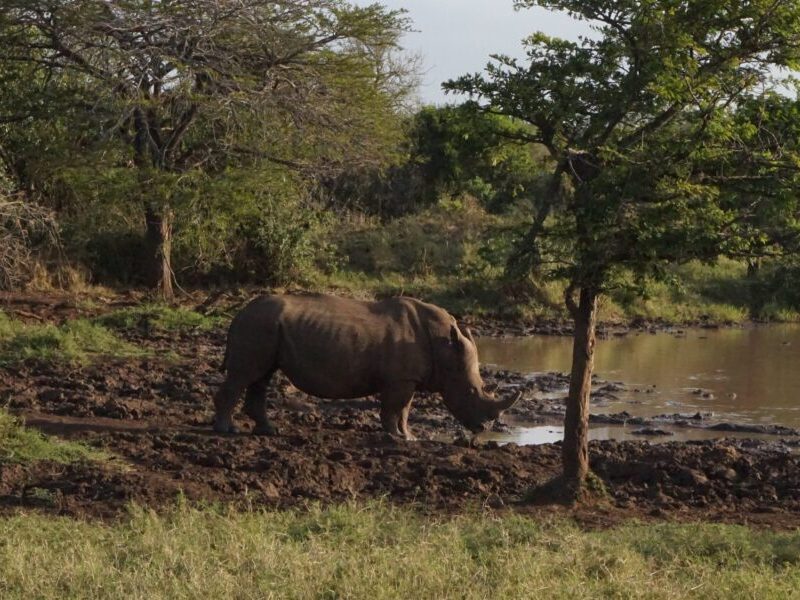
A placid rhino in the evening / Photo by Carolyn Ray
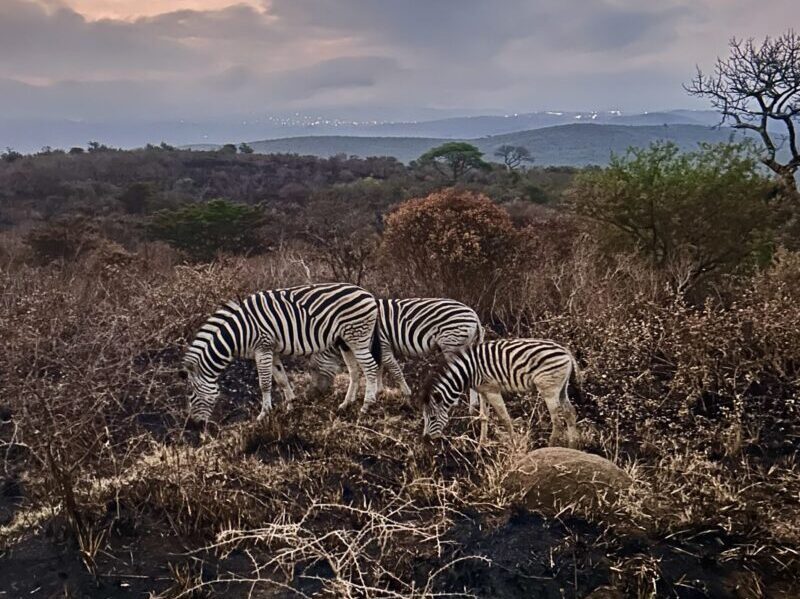
A family of zebras at sunset / Photo by Carolyn Ray
There are only three recognized rhino orphanages in South Africa, according to Blake from the Zululand Conservation trust, who gives us a tour that leaves me in shock. Learning about rhino poaching and its effects on other wildlife is devastating. When poachers kill a rhino for its horn, the babies are left alone, having witnessed a brutal attack. The orphanages raise the babies and then release them back into the wild. It’s estimated that there are 400 rhinos killed every year, and 100 alone in Hluhluwe Park, he says. We’re not permitted to take photographs of a small baby rhinoceros noisily slurping milk from a bottle, or the ICU where the infants are brought after being rescued by teams with helicopters, K-9 units and passionate volunteers. Support the Zululand Rhino Orphanage here.
On World Rhino Day, September 22, we join Grant Fowles from the Rhino Project to assist with Rhino Art. Children from grades 3-6 colour in rhinos, writing their messages of love and hope to protect the rhinos. The Rhino Project funds an anti-poaching unit, supports rangers, and provides education, along with other organizations like Zululand Anti-Poaching Wing and Rewilding Africa. Learn more about the Rhino Project here.
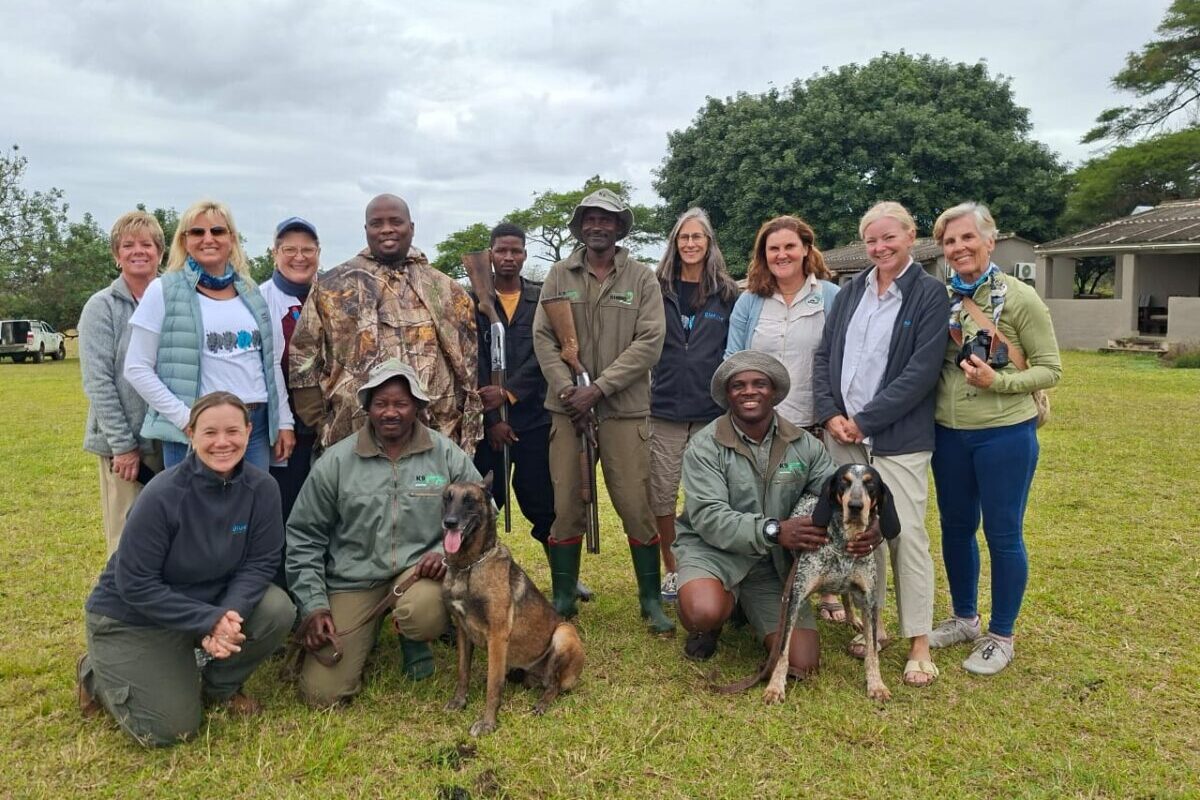
The Rhino Project funds several anti-poaching projects, including Rhino Art and K-9 Antipoaching units / Photo by Carolyn Ray

Young students holding their winning ‘Rhino Art’ drawings / Photo by Carolyn Ray
4. The joy of a parade of elephants
Seeing your first elephant in the wild is an intoxicating event. In St. Lucia, African elephants are practically bursting out of the bushes. Our guide, Cibonello, knows to respect the distance from the elephants to the cars, but several self-drive vehicles put themselves at risk by driving far too close for comfort. In one situation, a van is almost toppled when it blocks the road where a baby elephant and his mother want to cross.
In Zuka Private Reserve, I have to remind myself we’re not in Jurassic Park, and that dinosaurs won’t suddenly appear from the bush. Our guide, Kelwan, has 16 years of experience and seems to know all the animals’ habits intimately. One of the most poignant moments is when a massive bull elephant with two gorgeous, long tusks walks towards our vehicle. We are spellbound as he stops, gazes at us, and moves on, walking just a few feet behind us. The message here – respect.
5. A cheetah collaring surprise
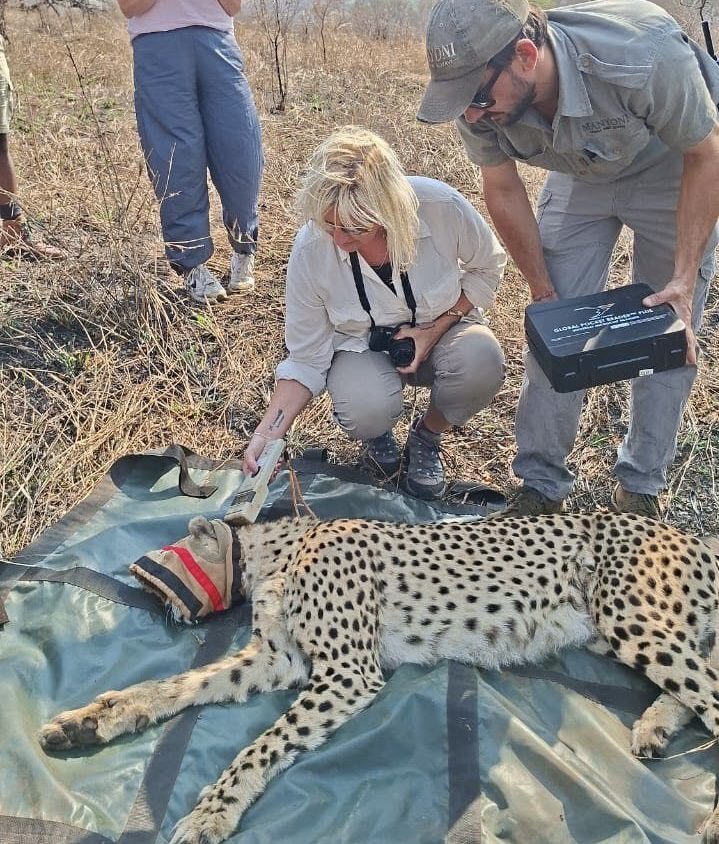
One sunny morning, Carla greets us with a grin and a surprise – we’re invited to see a cheetah having her collar removed. We wait somewhat patiently as the wildlife vets sedate the mother, who has two young cubs, and then drive down to see her sleeping under a tree, with her head covered.
Veterinarian Dr. Toft shows us some of the features that make a cheetah unique: the pads on her feet, which grip the ground; the claw behind her feet that she uses to hook and trip prey; her flat tail, which acts like a rudder when she runs. Cheetahs are at the bottom of the food chain with predators like lions and hyenas.
“When cheetahs run, they don’t need oxygen,” Dr. Toft says. “When they hit top speed, they can go explosive, up to 60 miles an hour.”
One of the tasks for the medical team is to identify the cheetah, and I’m thrilled to be asked to scan for the chip in her neck, which tells us she’s seven years old. Being that close to this gorgeous creature is a life highlight I’ll never forget.
Stay connected here with a Saily eSIM by NordVPN. Enjoy 5% off now with code JOURNEYWOMAN!
6. A pangolin, the world’s most trafficked animal
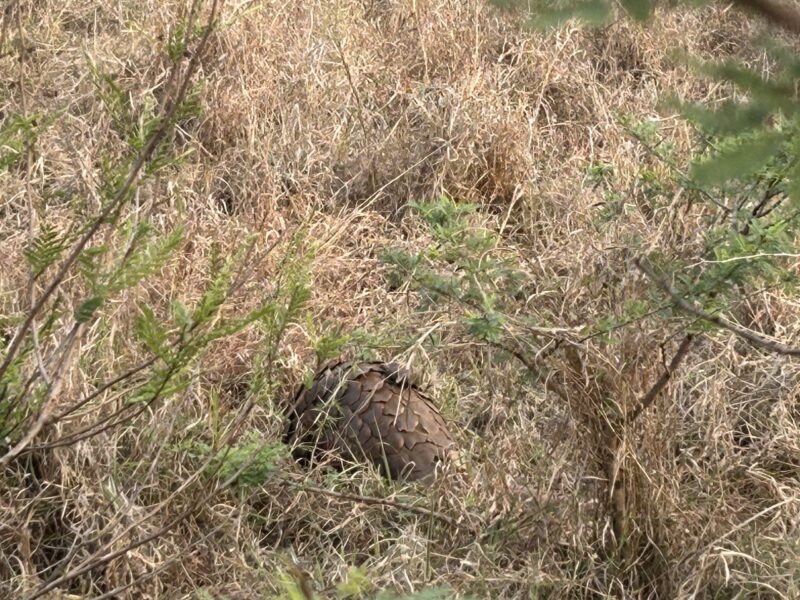
That same day, there’s a second surprise. A pangolin has been picked up near our camp. Pangolins are the most trafficked animal in the world. There are eight species in the world; four in Africa and four in Asia. Unlike rhinos, poaching is opportunistic, but it is a criminal offence. Even so, the pangolins on this reserve have GPS tags and telemetry that let park rangers know when they are active. Once almost extinct, they are now breeding again.
We wait patiently in the truck as the ranger, Louie, and his pangolin tracking dog Lucy go into the bush, searching for this elusive creature that walks on two legs and resembles an armadillo with scales. Louie comes back, disappointed that he can’t find the pangolin. But we are in luck. About 30 minutes later, the telemetry system starts beeping, and we rush into the wild, just in time to see the pangolin leaving his hole, happily eating ants along the way. This is a dream come true for me. I am giddy with joy.

Final moments on our South African safari
Over the last two weeks in South Africa, I’ve witnessed more wildlife than I ever imagined and had experiences I could never have dreamed of: dazzles of zebras, towers of giraffes, gangs of cape buffaloes and impossibilities of wildebeests. And the birds — blue jacarandas, weavers, woolly storks, yellow crakes — are everywhere.
But the true value of travel isn’t in checking off places and things on a list – it’s the people you meet who shift your perspective, challenge you to think differently and open your eyes to a different world. On this conservation trip, we forge new friendships with people who are actively involved in South Africa’s transformation, like conservationists, local guides, K9 anti-poaching units, non-profit leaders and schoolchildren.
Our trip ends around the campfire with our new friends hearing their stories of living in the bush, growing up in South Africa and the complex world of conservation and anti-poaching of rhinos, elephants and pangolin. Despite devastating setbacks, massive criminal poaching networks and limited resources, they shared these stories with open hearts, laughter and courage. I realize that this kind of experience is only possible with a local leader who is deeply invested in her own community – it’s not manufactured just for tourism. This rugged and wild place has its challenges, but with women at the forefront, we can all make a difference. This has been more than a safari, it’s a series of experiences and connections that cross countries and borders. Thank you, Carla and thank you, Mama Africa.
Disclaimer: Our talented writers are often invited by tourism boards and travel companies to experience places like this first hand so that they can share them with you. As a guest of Blue Sky Society Trust, Carolyn was not compensated for her time spent researching, planning and writing this feature, nor was JourneyWoman for publishing it. In addition, the host organizations did not review this article before it was published, a practice that allows the writer to express her perspective with integrity and candor.
More From South Africa
Carolyn Ray

In 2023, Carolyn was named one of the most influential women in travel by TravelPulse for her efforts to advocate for women over 50 in travel. She has been featured in the New York Times, Toronto Star and Conde Nast as a solo travel expert, and speaks at women's travel conferences around the world. In 2025, she received her second SATW travel writing award and published her first book "Never Too Late: How Women 50+ Travellers Are Making the Rules" with co-author Lola Akinmade. She leads JourneyWoman's team of writers and chairs the JourneyWoman Women's Advisory Council, JourneyWoman Awards for Women 50+ and the Women's Speaker's Bureau. She is the chair of the Canadian chapter of the Society of American Travel Writers (SATW), a member of Women Travel Leaders and a Herald for the Transformational Travel Council (TTC). Sometimes she sleeps. A bit.
I certainly enjoyed your different articles and look forward to consider traveling with your new organization.